PPC HANIFGoogle Ads · GTM · Tracking
Case Study · E-commerce, UK

Google Ads Case Study for E-commerce Business520% ROAS and £57.9K in Sales

For an online store, Google Ads only matters if it brings in sales that pay for themselves. This case study shows how Google Ads was run for a UK e-commerce business so every pound of ad spend was measured against real purchase value, and budget moved toward the products and campaigns that returned the most.

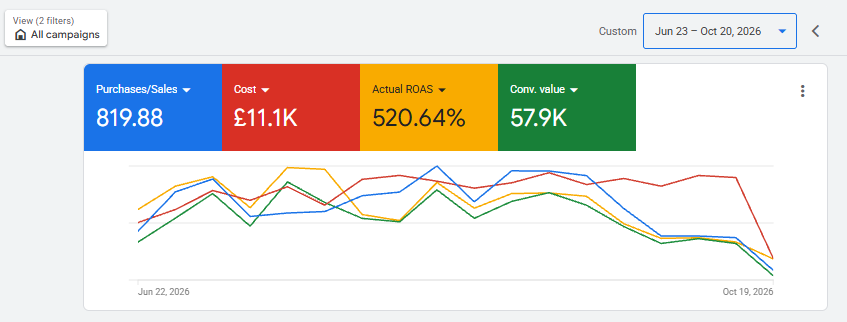
Google Ads results for a UK e-commerce store: 819.88 purchases, £11.1K cost, 520.64% ROAS and £57.9K conversion value from June 23 to October 20, 2026

520.64%

ROAS

£57.9K

Conv. Value

£11.1K

Ad Spend

Google Ads performance summary, June 23 to October 20, 2026: 819.88 purchases, £11.1K spend, £57.9K conversion value, 520.64% ROAS.

Before

The Starting Problem

E-commerce accounts often optimise toward clicks or add-to-carts instead of real revenue. When purchase values are missing, duplicated or wrong, Google cannot tell a £10 order from a £200 one, so budget drifts toward cheap traffic that does not sell.

After

The Fix

We made purchase tracking accurate first, with the real order value sent on every sale and no duplicates, then structured Shopping and Performance Max campaigns around product performance and bid toward return on ad spend instead of clicks.

01

Why Revenue Tracking Comes First for Online Stores

Smart Bidding learns from the conversions you send it. If the only signal is a purchase with no value, or the value is counted twice, Google treats every order the same and cannot learn which products, searches and audiences actually make money.

Sending the real basket value with every purchase is what allows bidding to aim for return on ad spend. Everything else in the account is built on top of that.
02

Results From June 23 to October 20, 2026

  • 819.88 purchases tracked from Google Ads
  • £57.9K in conversion value
  • £11.1K total ad spend for the period
  • 520.64% ROAS, meaning about £5.21 in sales for every £1 spent
  • Average order value of roughly £70
03

How the Campaigns Were Built

  • Product feed cleaned up so titles, prices and availability matched the website
  • Shopping and Performance Max campaigns split by product performance, so best sellers get budget and slow products do not drain it
  • Search campaigns for brand and high-intent product terms, kept separate from prospecting
  • Bidding set to target ROAS once enough purchase data was flowing
  • Search terms and product reports reviewed every week to cut wasted spend
04

How Purchases Are Tracked

  • Purchase event fired once per order, with the real order value and currency in GBP
  • Transaction ID passed with every purchase so the same order is never counted twice
  • Enhanced Conversions enabled so sales still match back to the ad click when cookies are limited
  • GA4 and Google Ads checked against store orders so the numbers agree
  • Cookie consent respected for UK visitors, in line with UK GDPR
05

What an Online Store Should Do Next

With accurate revenue tracking in place, the next step is to look beyond the first order. Adding profit margins or customer lifetime value to the data lets bidding favour the products and customers that make the business the most money over time, not only the biggest first basket.

FAQ

E-commerce, UK: Common Questions

What is a good ROAS for a UK e-commerce store?

It depends on your margins. A store with high margins can be profitable at a lower ROAS than one with thin margins. In this account the ROAS was 520.64% between June 23 and October 20, 2026, meaning about £5.21 in sales for every £1 spent.

Why do purchase values need to be tracked correctly?

Without the right order value, Google cannot tell a small order from a large one. Accurate values let bidding aim for revenue and return on ad spend instead of just the number of sales.

Do you work with Shopify and WooCommerce stores?

Yes. Purchase tracking, Enhanced Conversions and product feeds can be set up for Shopify, WooCommerce and most other e-commerce platforms.

Want This Approach for Your Account?

Start with a free 30-minute audit. You will see what is working, what is wasting budget and what I would fix first.